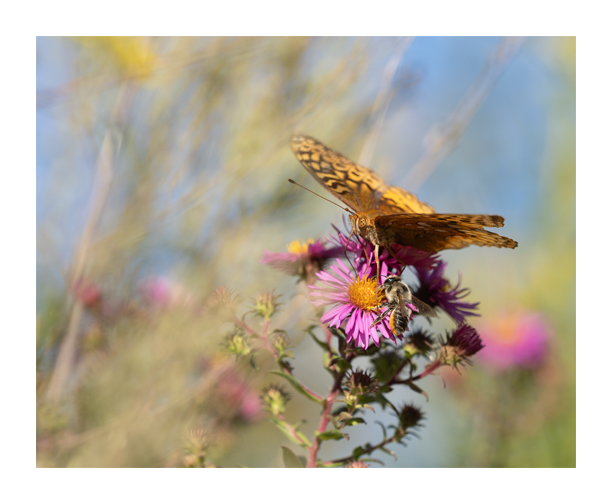
Here, a fritillary and a leafcutter bee nectar on a New England Aster on a blustery day.
Here, a fritillary and a leafcutter bee nectar on a New England Aster on a blustery day.
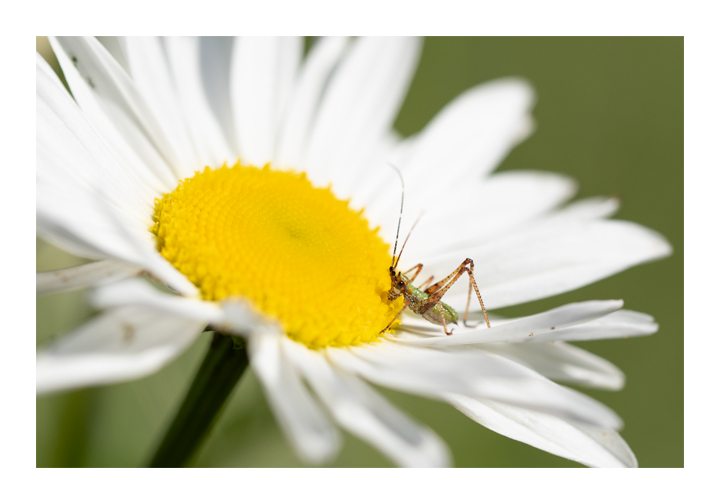
This is a bush katydid nymph. Bush katydids are common in Maine, and when I find one on a plant in my yard, I generally continue to see it on the same plant for a number of days in a row.
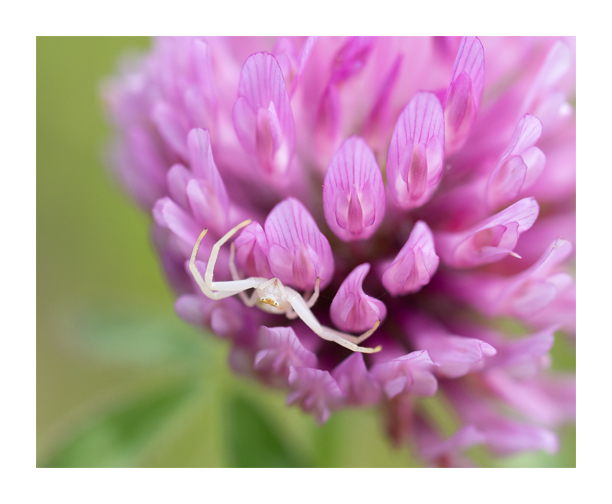
Here’s a crab spider waiting in a red clover flower to ambush prey.
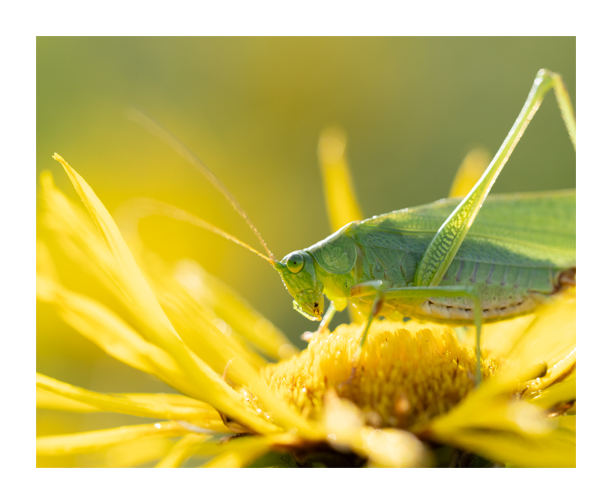
Here is a portrait of a katydid that I took at the very end of July. There are about 255 species of katydids in North America. I normally only see them in flight, when I accidentally flush them. I was thrilled to find this one posed nicely, backlit by the morning sun.
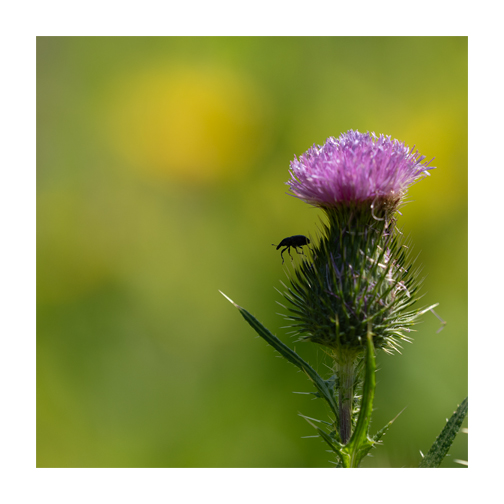
At first glance this weevil appears to be jumping away from the thistle, but it is actually standing on the pale tips of the flower’s spines.
There are over 60,000 species of weevil in the world. While I was not able to identify the one in the photo because it was in the shade, it is possible that it is Rhinocyllus conicus, a species introduced to North America from Europe in an effort to combat invasive milk thistle. The thistle in the photo is not milk thistle, and the observation of R. conicus attacking other thistles over the years means that their intentional release is now prohibited.

A black swallowtail caterpillar sits on some dill. The dill is glistening with raindrops which appear as soft circles in the background. Black swallowtail caterpillars feed on dill and its relatives, including Queen Anne’s Lace, fennel, carrot, and fennel.

Here’s a paper wasp working on its nest. Paper wasps make small nests that are not fully closed off, as can be seen here. Some species of paper wasp can recognize other individuals of their species using facial recognition.