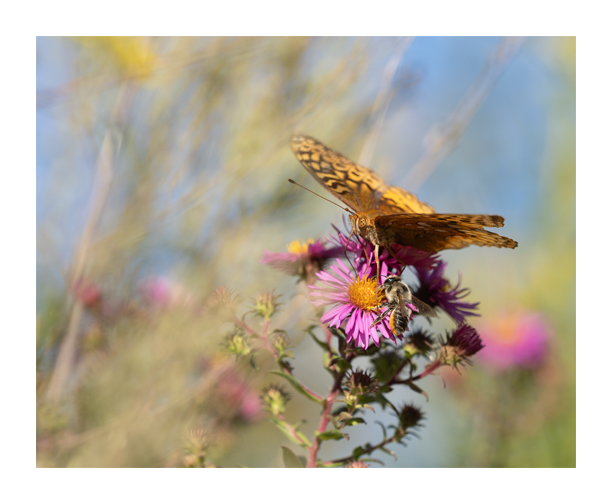
Here, a fritillary and a leafcutter bee nectar on a New England Aster on a blustery day.
Here, a fritillary and a leafcutter bee nectar on a New England Aster on a blustery day.
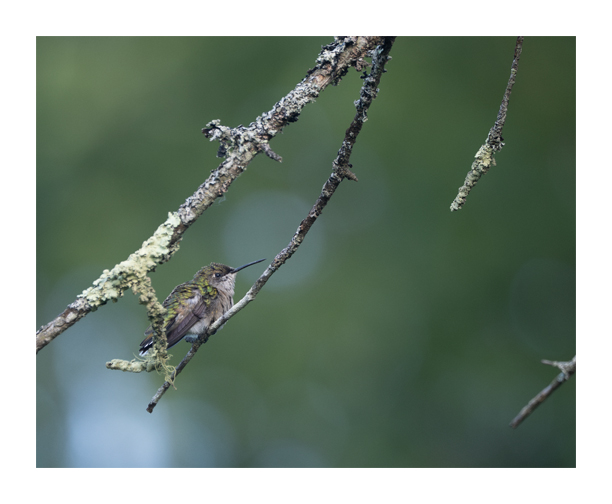
This is a Ruby-throated Hummingbird. Males have feathers that are ruby red in direct light but can look black in some lighting conditions. Females and juveniles do not have these flashy throat feathers. This individual was alternating between resting, and feeding from jewelweed and monarda flowers.
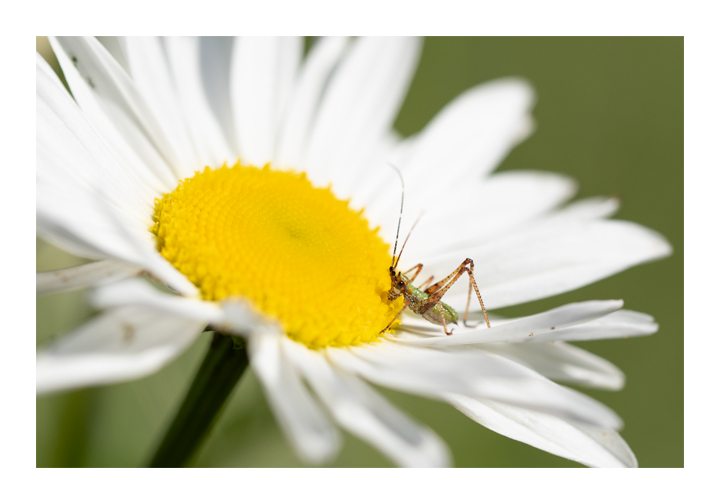
This is a bush katydid nymph. Bush katydids are common in Maine, and when I find one on a plant in my yard, I generally continue to see it on the same plant for a number of days in a row.
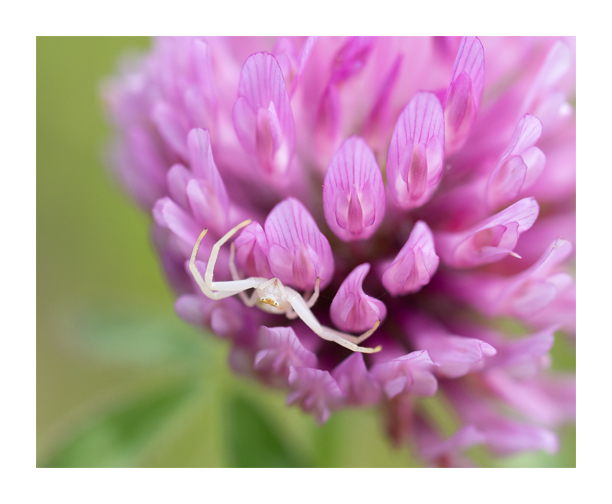
Here’s a crab spider waiting in a red clover flower to ambush prey.
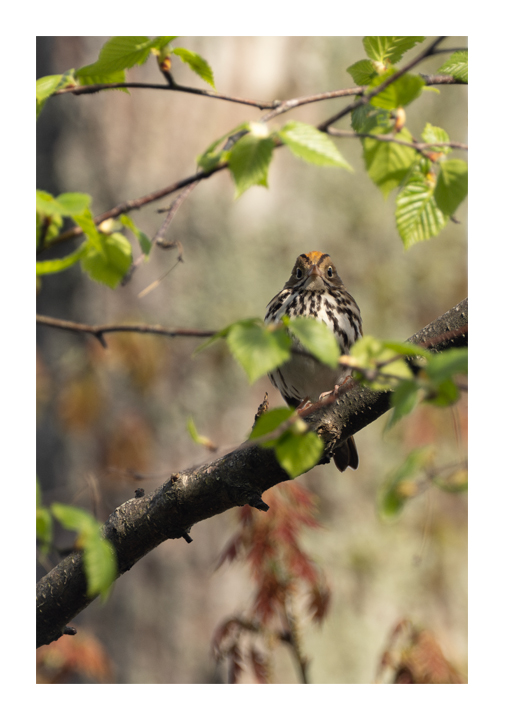
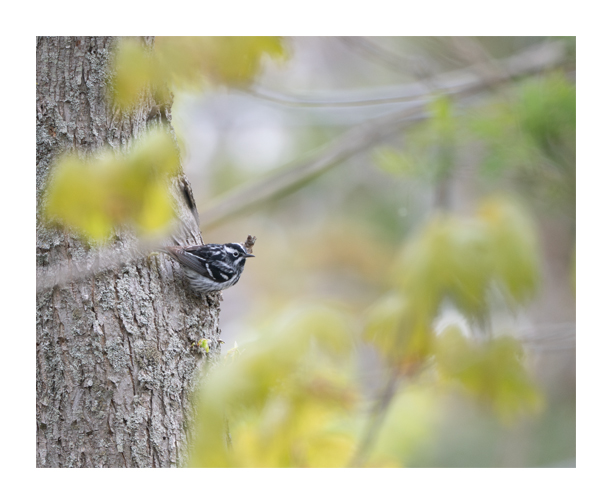
May is the month when warblers migrate north. Here are two of my favorites. An Ovenbird (left) and a Black-and-white Warbler. Ovenbird nests are woven domes on the forest floor. Unlike nuthatches, which generally move down, and Brown Creepers, which generally move up, Black-and-white Warblers go up, down, and all around tree trunks and branches, gleaning insects to eat.
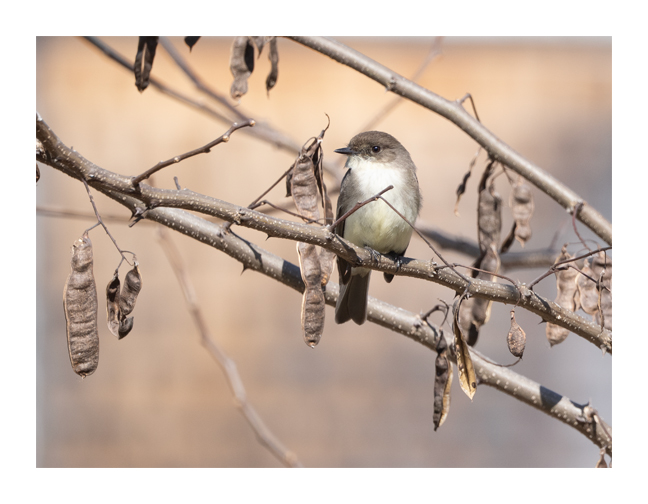
Eastern Phoebes are always the first flycatchers to return to my yard in the spring. They often reuse nests year after year so there’s a good chance that I’ve seen this individual phoebe for a few years in a row now.
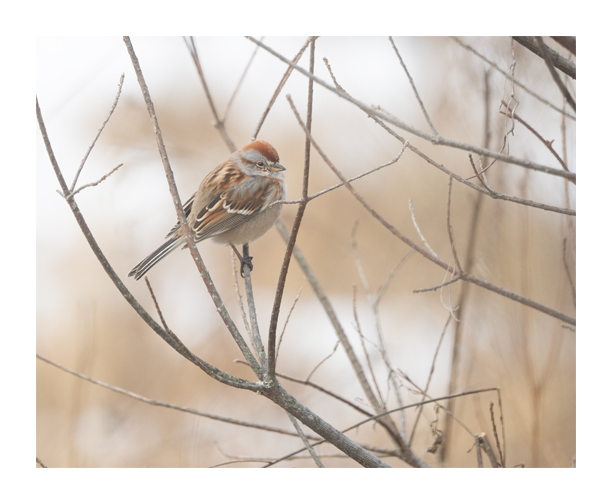
American Tree Sparrows have been regulars in my yard for winter 2025-2026 and early spring 2026. American Tree Sparrows nest in the far north of North America, including on the tundra where there are no trees. Their winter range includes much of the United States.
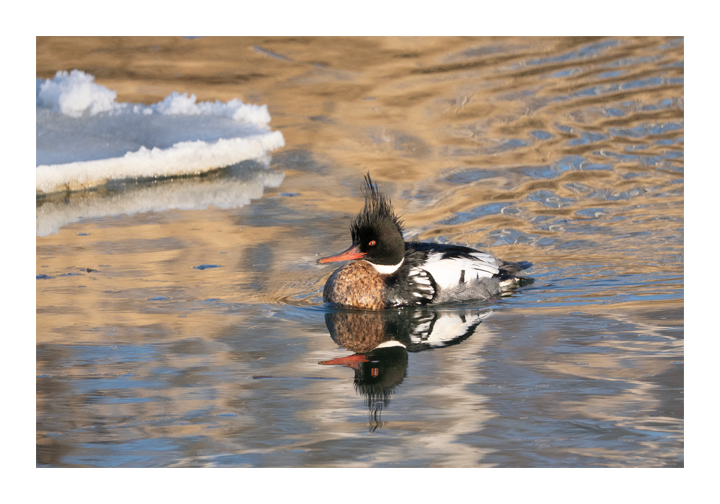
Here is a portrait of a male Red-breasted Merganser taken close to sunset. I like the colors of the water and snow, and the reflection of the duck as he is floating along. Of the three species of merganser found in Maine, I see Red-breasted Mergansers the most frequently.
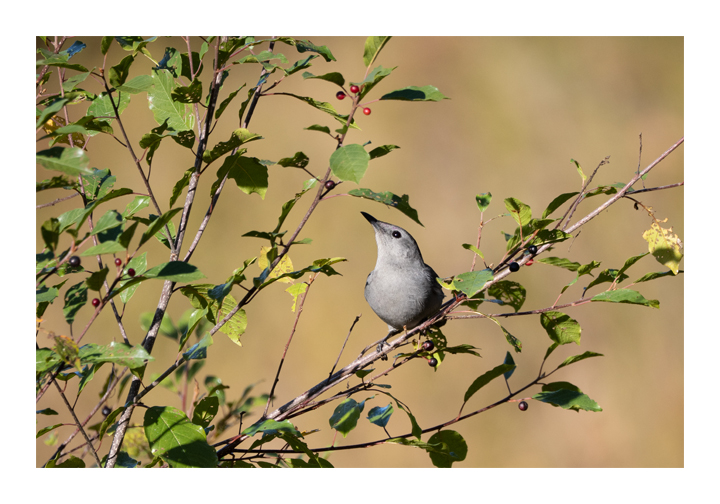
Here is a Gray Catbird pausing for a split second before reaching up to eat a berry. Gray Catbirds leave Maine in the winter, but can be found year round along the Atlantic coast from Massachusetts to Colombia.
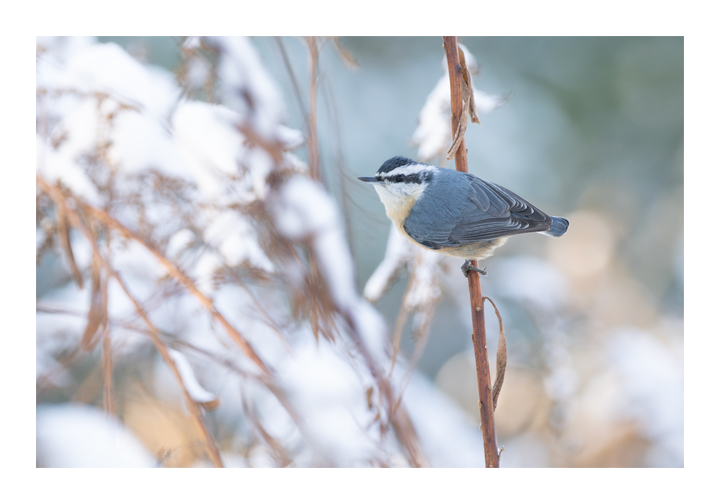
This year I’ve seen and heard Red-breasted Nuthatches in my yard far more often than in 2023 and 2024. Here, a female briefly clings to dead goldenrod after a snowstorm.