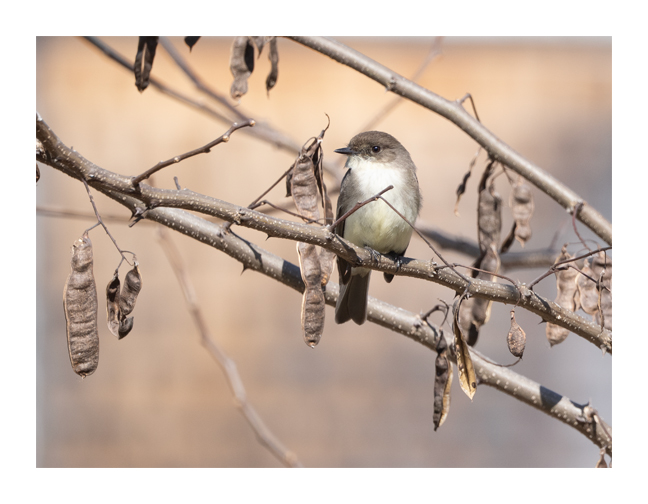
Eastern Phoebes are always the first flycatchers to return to my yard in the spring. They often reuse nests year after year so there’s a good chance that I’ve seen this individual phoebe for a few years in a row now.

Eastern Phoebes are always the first flycatchers to return to my yard in the spring. They often reuse nests year after year so there’s a good chance that I’ve seen this individual phoebe for a few years in a row now.

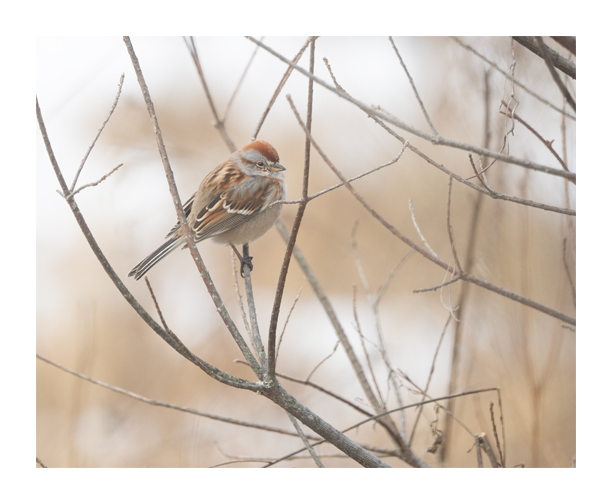
American Tree Sparrows have been regulars in my yard for winter 2025-2026 and early spring 2026. American Tree Sparrows nest in the far north of North America, including on the tundra where there are no trees. Their winter range includes much of the United States.

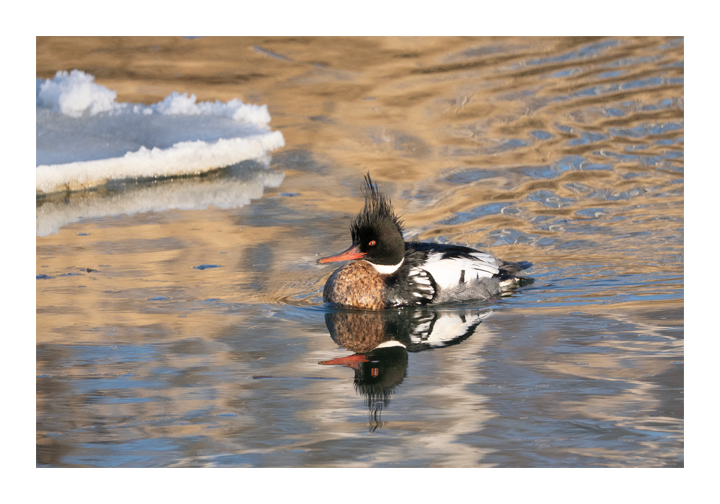
Here is a portrait of a male Red-breasted Merganser taken close to sunset. I like the colors of the water and snow, and the reflection of the duck as he is floating along. Of the three species of merganser found in Maine, I see Red-breasted Mergansers the most frequently.

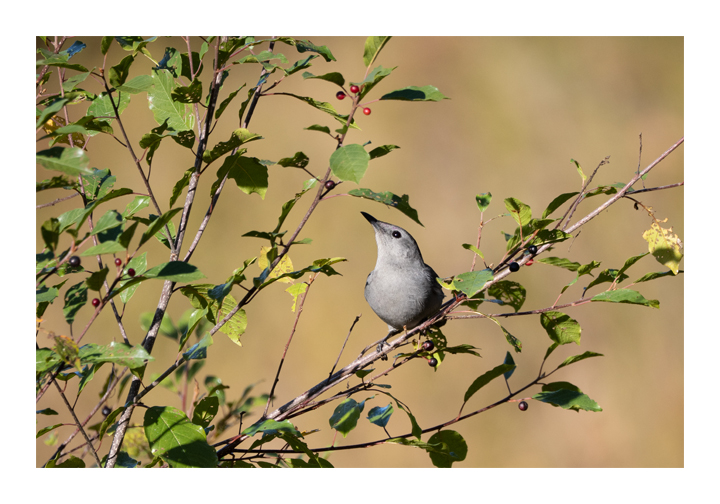
Here is a Gray Catbird pausing for a split second before reaching up to eat a berry. Gray Catbirds leave Maine in the winter, but can be found year round along the Atlantic coast from Massachusetts to Colombia.

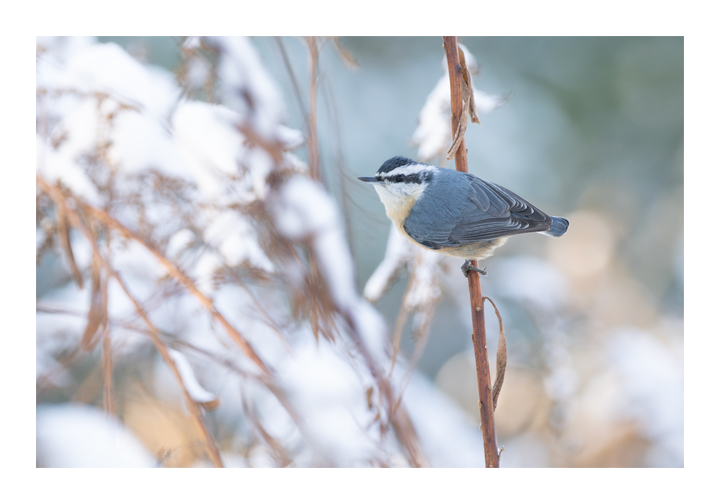
This year I’ve seen and heard Red-breasted Nuthatches in my yard far more often than in 2023 and 2024. Here, a female briefly clings to dead goldenrod after a snowstorm.

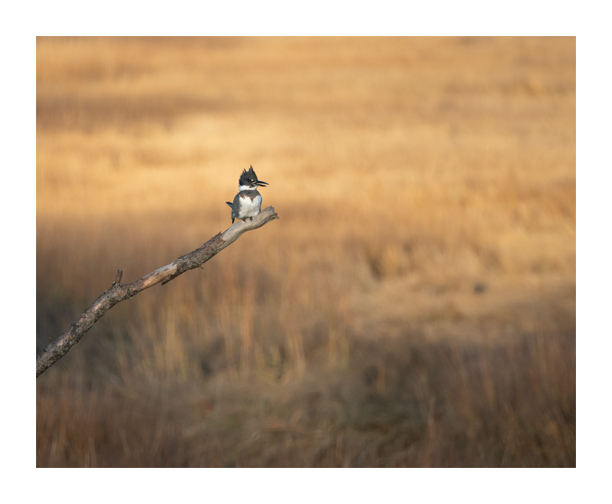
Belted Kingfishers can be found year-round in southern Maine. Males, like this individual, have a dark blue collar. Females have the dark blue collar, and a rusty orange band below it. Belted Kingfishers, as their name suggests, mostly eat fish. Occasionally however, they eat foods like amphibians, young birds of other species, and berries.

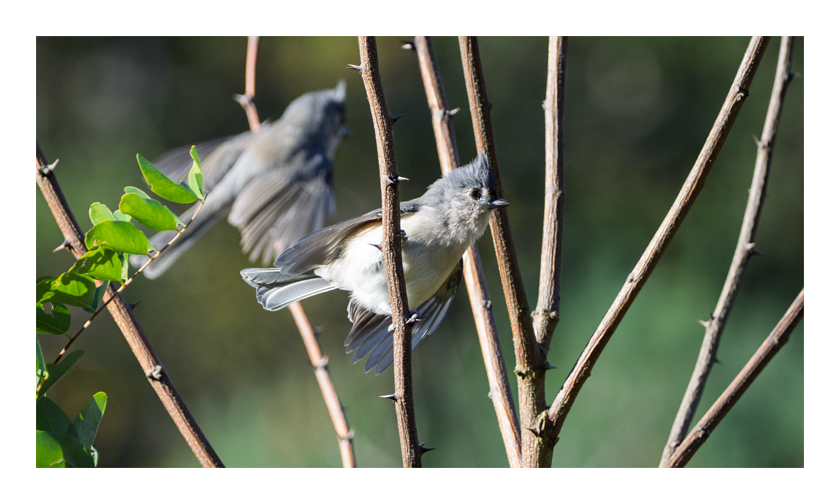
Tufted Titmice pairs usually remain in the same territory year round, and they are one of the birds I most frequently see and hear in my yard. At this time of year they are busy caching seeds to help them get through the winter.

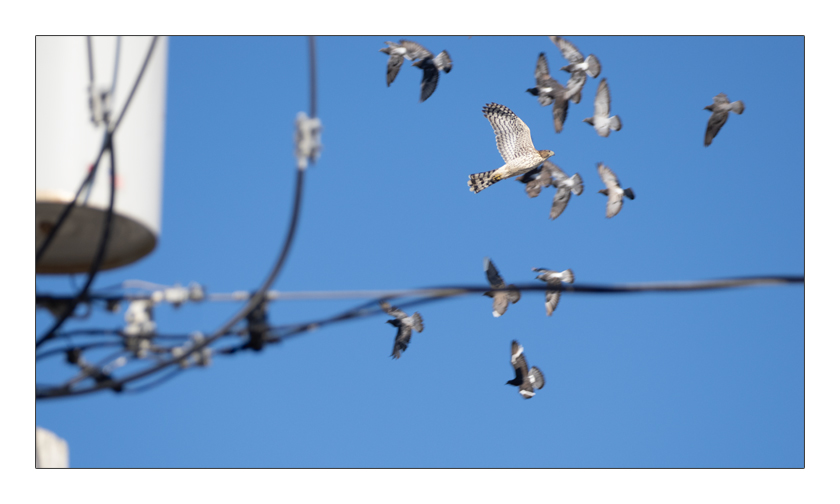
The pigeons in this photo are from the same flock that appear in my June image of the month. The day I took this photo, the pigeons were resting on the power line when this juvenile Cooper’s Hawk swooped in and flew around with them for a bit. In the end, the hawk decided to try and catch a shorebird rather than a pigeon.

Here are some Rock Pigeons, captured on film with my pinhole camera. Pinhole cameras capture a wide view, providing a completely different feel than what I normally get with my telephoto lens. For this photo my camera was on the ground, so the pigeons appear almost as large as the building, which is quite far away from the pigeons.
It is important to note that these pigeons hang out in a parking lot where humans often feed them. This worked to my advantage for the photo – when I crouched down on the ground the pigeons came running over. I did not feed them. This photo is also evidence of how much human behavior can condition wildlife in ways that ultimately can kill the animals. I’ve seen humans feed these pigeons out of their car windows many times, and I’ve seen several dead pigeons in this parking lot – run over by cars because the pigeons approached in hopes of a meal.

I photographed this female Northern Cardinal perched in a sunbeam earlier this month. Cardinals are year-round residents in Maine and they are one of the few species of birds where both males and females sing. Pairs share song phrases.